Investor psychology: how VCs really make decisions
Investors like to describe their process as rigorous. It is, eventually. But the first decision usually happens in the room, and it isn't about your spreadsheet.
 Slavomír Hruška · · 7 min read
Emotion first, justification second
Ask a partner why they invested and you'll hear about market size, retention and team. Ask them when they knew, and the answer is often "in the first twenty minutes." VCs make emotional decisions first, then justify them rationally. The diligence that follows is mostly about confirming a feeling, or finding a reason to walk away from it.
This is why two founders with similar metrics get very different outcomes. One leaves the investor curious. The other leaves them informed.
The three questions behind every first meeting
Whatever the agenda says, most investors are quietly answering three questions:
- Do I trust this person? Not just their honesty, but their judgment under pressure.
- Do I want to work with them for ten years? A venture investment is a long relationship with very few exits.
- Could this be big enough to matter? The fund needs outliers, so a good business isn't enough.
Your deck mostly addresses the third question. The first two are answered by how you show up.
What VCs look for beyond the metrics
In conversations with more than 100 investors, the same signals came up repeatedly: founders who know what they don't know, who answer hard questions directly, and who are clearly going to build the company with or without this particular check. Desperation reads as risk. Conviction reads as momentum.
Pattern-matching and FOMO
After the meeting, your champion has to sell you to their partners. They'll reach for patterns: founders like you who succeeded, markets like yours that worked. They'll also watch who else is interested. Nothing speeds up an investment decision like the sense that someone else might get there first.
Using this in your next pitch
- Open with the story of why you, not the market slide.
- Answer the toughest question before they ask it.
- Give your champion a simple sentence they can repeat to the partnership.
- Run your process tightly, so momentum is visible.
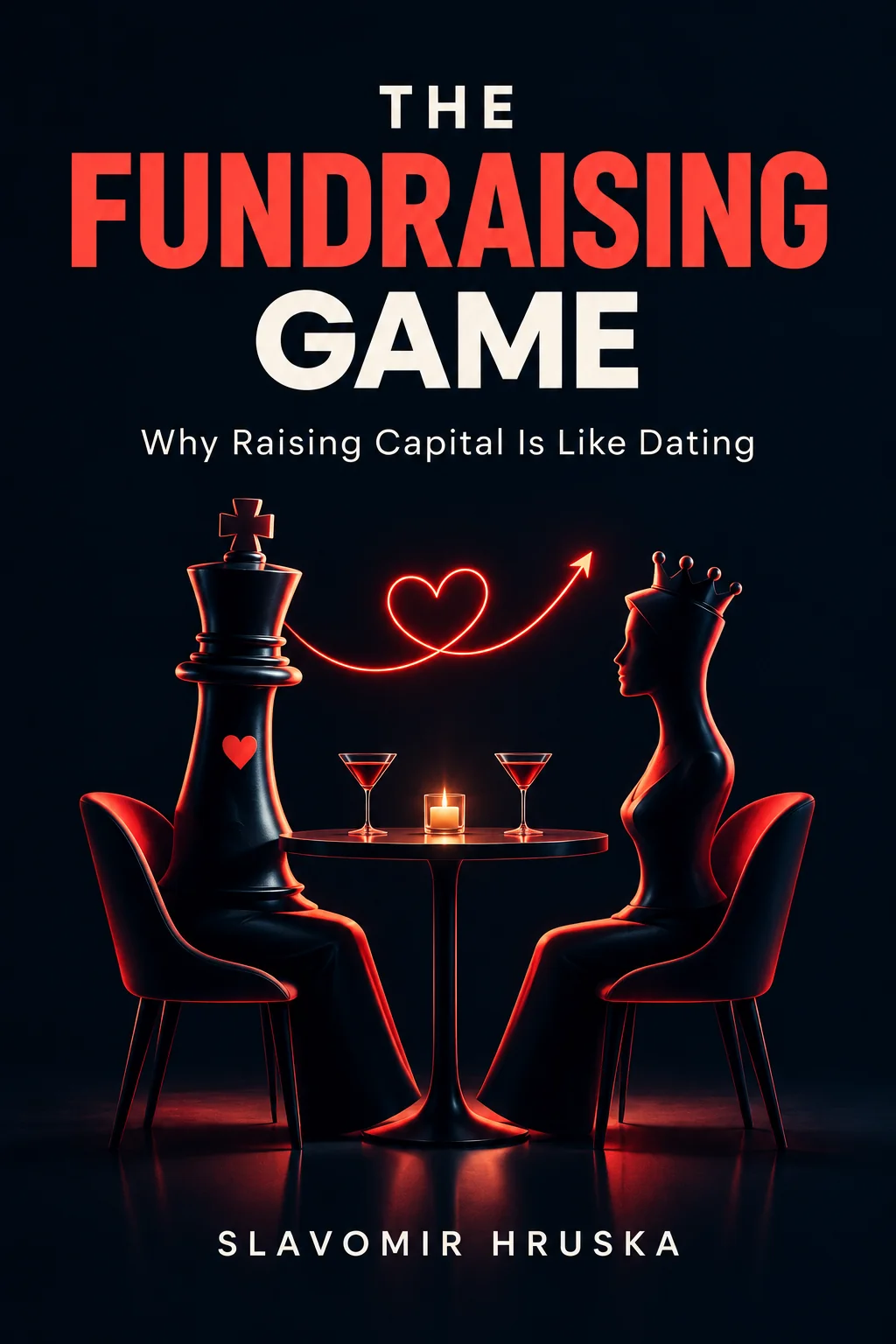
The full playbook is in the book.
Get early access